

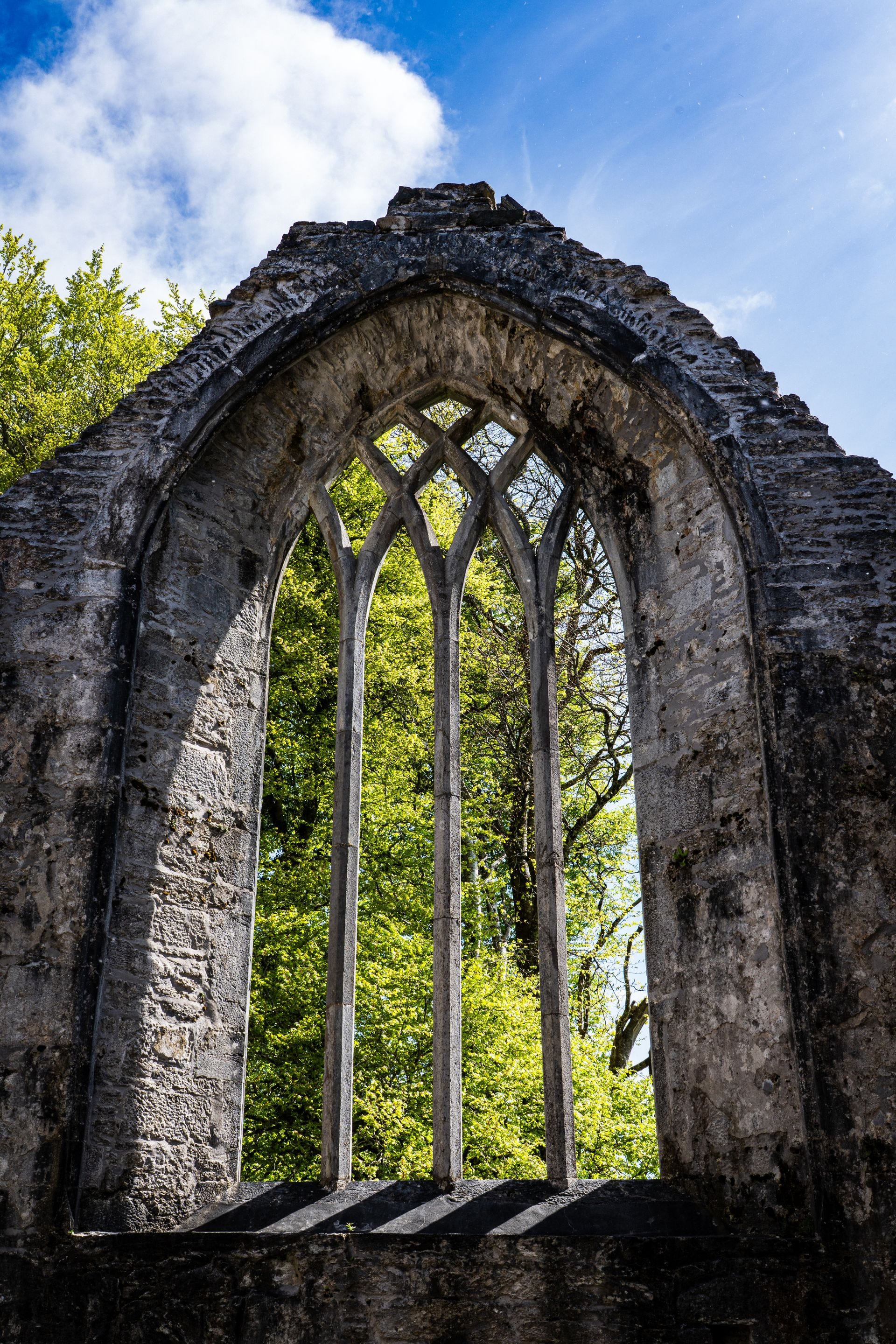
What if I was meant to be there when Daddy died?
Welcome to the wilderness. My name is JJ van de Vyver and I’ll be your guide on the show where we explore ideas so wild they might just work.
I spent fifteen years of my life dedicated to climbing the success ladder: working with top-tier organisations, completing an MBA at the University of Oxford, jet-setting across three continents. The higher I climbed, the further I could see and the more concerned I became. Wild animals and spaces were evaporating, corporations expected us to work more and feel less, and GDP growth seemed to be the most important goal of our species. While I achieved success, I spent most of my time indoors behind a computer, used my holidays to recover from illness, withdrew from the people around me to conserve my energy, and slowly forgot what it felt like to pursue meaning and purpose. Now I’m trying a different approach. I believe that the way we organise society isn’t working, that the stakes are high, and that time is short. I’m convinced we need to go further in questioning how we do things, and that nature can guide the way. Welcome to Wild Ideas.
Today I’d like to share a personal essay with you about spirituality in the cathedral without a roof, revisiting the experiences that led to a more mature faith after losing my father. This is the second of five essays in this introductory series, where I’m leading you through my inner world so that we understand one another before setting off into the wilderness together. If you missed any of the previous instalments, have a read below:
Today’s wild idea: what if I was meant to be there when Daddy died?
This episode contains an account of my father’s passing that might be difficult for some readers. Please proceed with caution.
The cathedral without a roof
Descending into the crypt one stair at a time, my hand runs along the cool stones of the wall. The temperature drops, and the sounds of the cathedral above dampen into silence until all I can hear is foot upon stone. I’m nervous entering this place. I pause, breathe in and close my eyes… It’s 5:40 in the morning, I can hear sounds of someone heaving; my heart quickens, I’m racing to his bedroom now; I can hear my own voice, filled with knowing despair, “no no no no no no”…
Let’s take a few steps back.
Today I’m visiting the cathedral without a roof. It’s not a real place in the sense that we normally mean – you won’t find photos of it or a Google Maps entry. But I can take you there. I first heard about it from Jayni, a dear friend, mentor and over time fairy godmother. It was a metaphor she used to help people move between sets of beliefs. When working with a client, she loved exploring their conventional belief system within the cathedral and then, at any moment, inviting them outside into nature by hopping through a window or gazing up at the wondrous sky. The cathedral without a roof is an inner space, a sacred inner space. “Sacred” meaning that it is designated for a particular purpose. I’m sometimes asked whether it’s a religious space. I’d say not strictly… I suppose it depends on the person’s beliefs. I like to think of it as spiritual, that is, to do with meaning, connection and faith. “Meaning” being the value we assign through the stories we tell. “Connection” being the living relationship between us and all that is. “Faith” being the need to trust things that we cannot comprehend through the rational mind.
Jayni knew my dad well. Although, thinking back, it was my dad who first introduced me to Jayni. My dad was an electronic engineer born in the 1950s, always quietly interested in physics, stones and energy. He’d met Jayni at a fair where she gave a demonstration of a moving meditation practice and he immediately signed up to her Chakradance classes. I’d seen the change in him from attending those regularly, slow but discernible. He was opening up; he was inspired; he was sharing; we were talking. He’d always been an anchor through the seas of my life — he was the kind of dad whose house was always open to you with a beer in the fridge and our favourite chocolates in the cupboard — and now we were exploring spirituality together. Who would have thought that a supposedly conservative Afrikaans white man in his 60s would go once a week to dance blindfolded with music to observe his feelings. It was unheard of. That’s my dad. And that’s Jayni’s magic. He was dancing, and through it he was finding his way. I was so grateful that he did that, even though it seemed so revolutionary for someone of his generation of men. It made me realise that the worst tragedy is when we are closed to the path that holds our own healing. Though walking our own path is rarely easy or comfortable.
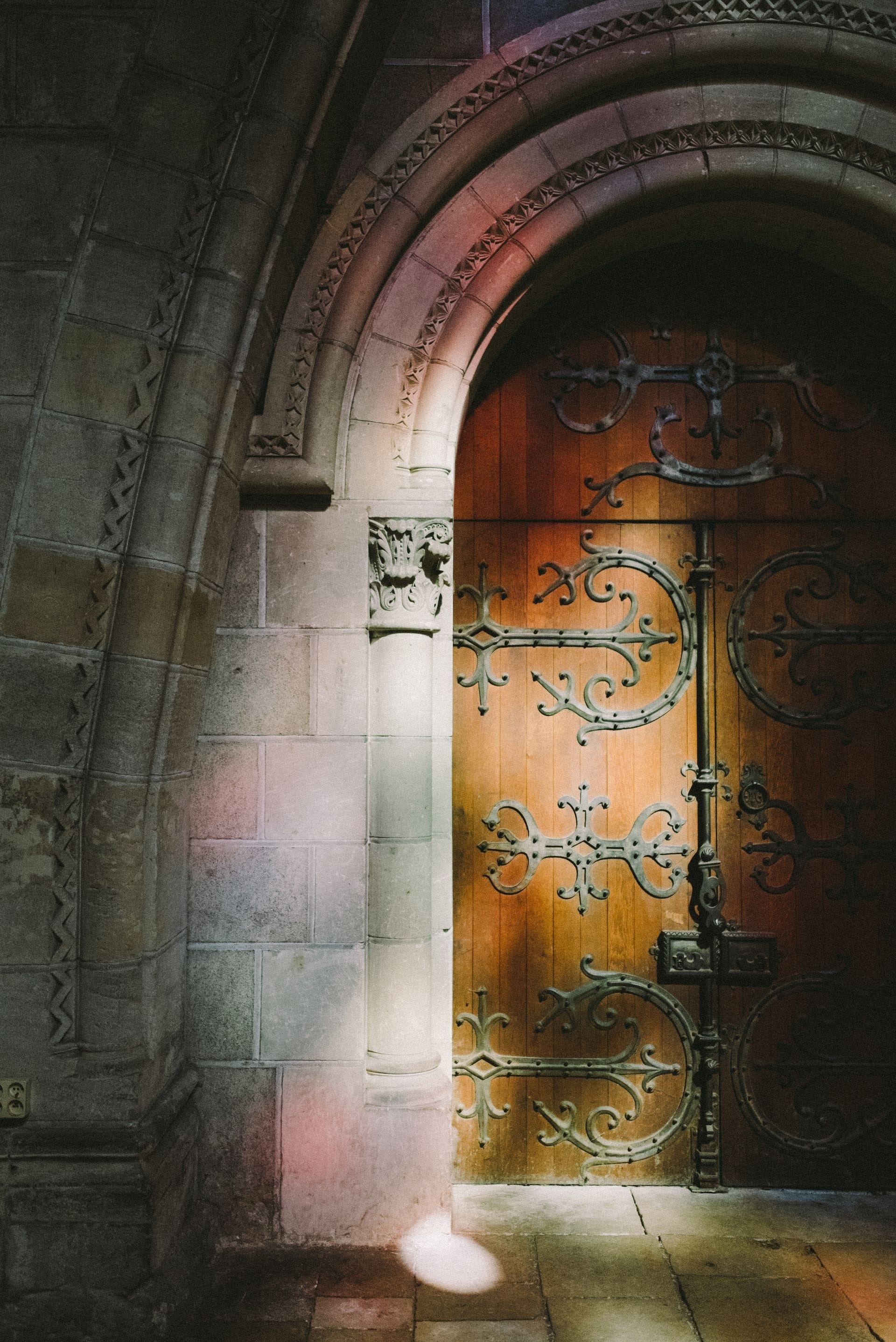
I enter the cathedral without a roof through the great wooden doors on the western side. It’s built traditionally, facing east. I pause with that familiar mixture of awe and wonder… It’s quite something to look upon the great stone columns with the blue sky and sunlight beaming down from above. Within the nave there are rows of wooden pews leading to a simple stone altar in the heart of the cathedral. The aisles run down either side along walls of white stone that frame great stain-glass windows in vibrant blues, reds, yellows and greens. Birdsong glides seamlessly between outside and inside.
This place holds my soul imprints – you can feel them in the air, moving full of life. Soul imprints are the defining moments that punctuate our lifetime. They arrive along our paths like familiar strangers, remembered more than experienced, as if some deeper part of us always knew they would come.
I turn left to walk clockwise, as is often the ritual in Christian churches. This keeps the walls, windows, sculptures and artworks on your left, the altar on your right. It’s interesting… the Tibetan Buddhist khora (or circumambulation) is also clockwise though that’s around a sacred site, so the site is always to your right. I remember countless walks around the main temple in Mcleodganj, Northern India during my four months there, spinning prayer wheels as I went among Tibetan monks in maroon robes and ordinary people counting their mantras on prayer beads. In Hinduism it’s also important to keep sacred objects – whether shrines, temples, trees, mountains or rivers – on your right. And then the Islamic tawaf around the Kaaba in Mecca is counterclockwise, holding the Kaaba on your left. Each tradition offers a different ritual to engage with the sacred. My favourite is still to walk a labyrinth, which – as Jayni was clear to point out – is very different from a maze. A maze has corridors with dead ends, and you can get lost. A labyrinth only has one way in and one way out, a route to the centre and back again, rich with turns along the way. You don’t get lost, you find yourself.
I pass the first niche in the northern wall where there’s a hand-sculpted statue on display. It’s a carving of the four of us, I must have been 7 or 8 and my brother was just 3 or 4. My mom and dad look really happy. I’m reminded of times around the swimming pool and in the sandpit under the pine trees in our garden. I’m reminded of my mom’s affinity for owls and my dad’s steadying presence, like a mighty baobab. A love wells in my chest and my eyes burn as tears invite themselves. I walk on, my right hand cupped within my left hand ahead of me, my thumbs touching together. In the next niche is a beautiful oil painting of the halo around the full moon from Christmas 2015. That was the night that the truth reached me, and I understood how painful my mother’s cancer would be for us in the months that followed. I’m filled with wonder and grief. I walk on. Each scene depicted here, each soul imprint, touches on something fundamental and enduring in me. They seem to connect my momentary body to the earth and to the sky, like columns in a cathedral without a roof. I slowly pass by several niches until I’m standing before the wooden carving of three buck on a hill. I feel drawn to this scene today. I touch the wood, feeling the texture of the grass. I close my eyes.
Three buck on a hill
I’m transported to a farm outside of Newcastle in South Africa. It’s 2015 and I’m spending the weekend with family friends on their sprawling farm. We’re off to a Saturday market and I’m in the backseat with one of their friends. She’s older than I am, with her own grown-up kids, and we start to talk about South African politics. I’m taken by the breadth of her knowledge and the incredible insight she’s laying before me. She dances between points of view and together we explore the myriad challenges facing our dear country. I’m excited and surprised by the nuance and flourish of her views, especially in this sleepy setting. I feel a kinship with this woman and quickly start to trust her; she feels like one of ‘my’ tribe: open, curious, pragmatic.
She turns the conversation to the topic of religion and asks about my relationship with God. She means God in the Christian, Biblical sense. She asks whether I feel I have room to get to know God better. As I have so many times in the past, I feel pulled between the honest yearning to come into deeper relationship in the way this person seems to be, and the twinge of nervousness whenever I recognise I’m close to a boundary that divides an in-group from an out-group. I feel safe from our conversation and tell her I’d like to know God better. She tells me that the only way to know God is through Jesus Christ, who died on a cross so that our sins could be forgiven. I listen, nodding in recognition that this is absolutely true, from her perspective, and I feel comfortable that I can be with her in her truth at the back of the vehicle on a farm road in South Africa as we pull up to the market.
We’re in a large space under a white tarpaulin filled with wooden tables and benches when she asks me too much. I am comfortable accepting Christ into my life, I tell her. His message of love and forgiveness have travelled two thousand years and revolutionised our sense of inherent human worth – of course I would welcome a relationship with this extraordinary being. She then delivers my sentence: “Then go,” she says, “and announce your faith by declaring to three witnesses that you accept Jesus Christ as your only lord and saviour”. I’m in turmoil… I feel tricked… Lured in by her openness and willingness to inhabit multiple perspectives and then asked to collapse all possible pathways to the divine down to one certainty. I venture outside and sit on the brown soil of my mother country, my mind and emotions a mess. I know from my time in India that if I was born in Tibet, I would be Buddhist, or born in much of India, Hindu. But her Christian faith holds that the received truth should be spread throughout the world. If I reject it now that I’ve received it, that is quite different from being born elsewhere and never hearing about it. Why is it so hard for me to accept her invitation? What if she is right? A dark cloud gathers over the nearby mountains and makes its way towards me. The rain comes down over the market, scattering the people under cover and nourishing the fields.
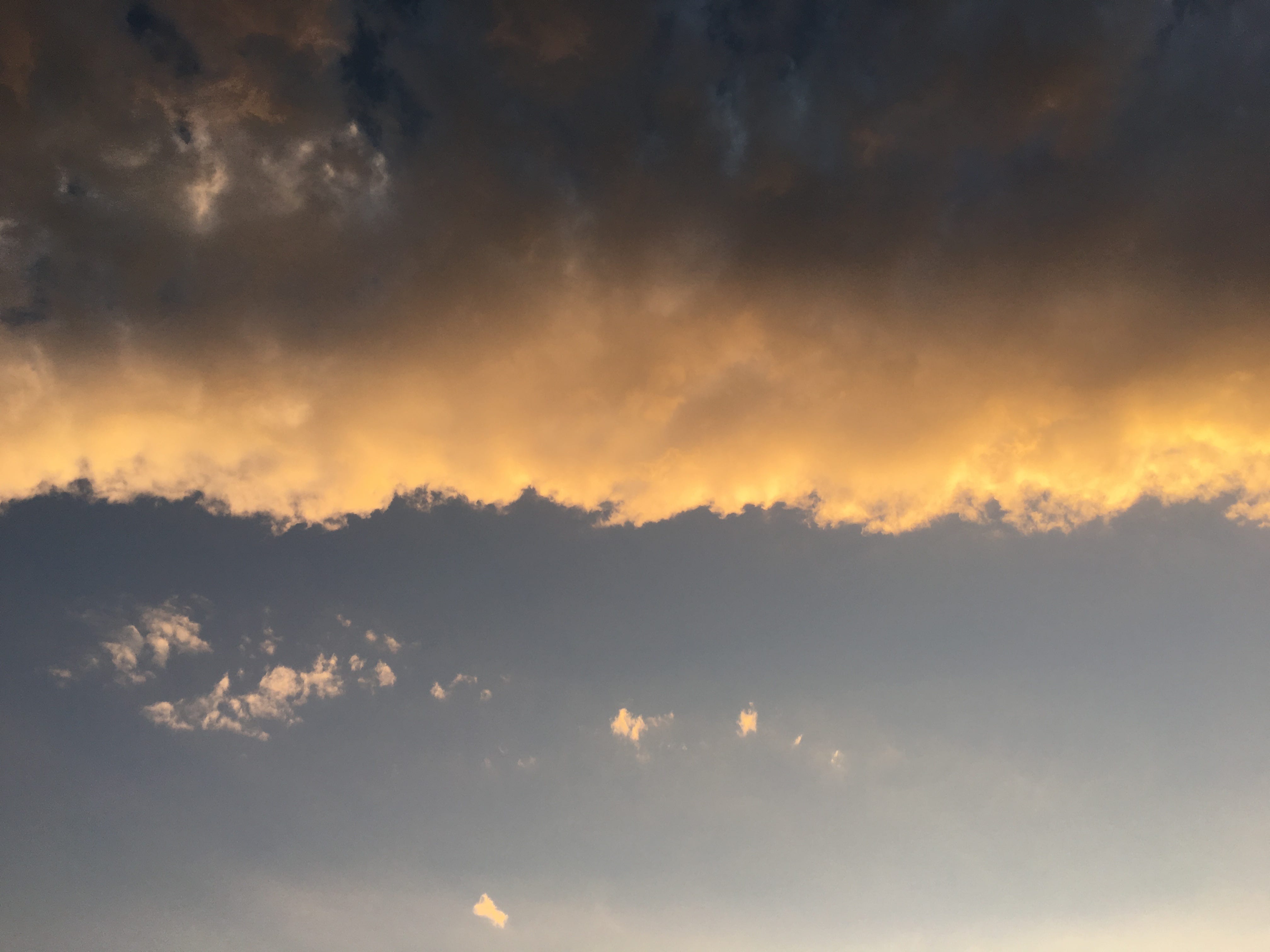
That evening after the rains clear I decide to go for a walk to find answers. I make my way along the gravel roads of our family friends’ farm, thoughts churning over in my head to the rhythm of my footsteps. These walking conversations with nature have always been how I’ve reached out beyond myself, making space for my soul to speak. I come across a hill that calls to me. “Great”, I think, “let’s climb the mountain”. As I round the top of the hill there’s only one shrub conspicuously presiding over the space. “And there’s my burning bush,” I think to myself, “let’s go have a conversation.” I walk towards it. Near the bush I can see the bony remains of a small animal that was likely eaten by a caracal or jackal. “Ok, we’ve got both life and death present”, I think as I step towards the bush. “Please help me,” I whisper earnestly as I sit down with a burning yearning alongside the bush, my eyes open to the undulating African landscape all around me. I breathe in and close my eyes and listen. I am filled with a conviction for the Earth I’m seated upon and the endless skies above… and the fears of getting the divine wrong start to subside in me. When I open my eyes, the sun is setting to my left, and the moon is rising to my right. “The Father and the Son…” I wonder aloud. I stand up next to the bush on the hill to take in the full beauty of the purple skies between the heavenly bodies and bring my hands together in gratitude in front of my heart. Here is sacred for me – this is where the divine speaks. As I prepare to leave, I look behind me… There, peering inquisitively across the hilltop at my devotion, are three antelope – most likely mountain reedbuck. “And there are my three witnesses”, I say with a marvelling smile. I thank them, before turning to walk back down the mountain.
I open my eyes and I’m back in the cathedral without a roof. I breathe in the mystery of that Newcastle afternoon for a moment before noticing that a Cape Wagtail is hopping on the windowsill beside me. The small brown and cream coloured bird is a frequent visitor to our family’s flat in Plettenberg Bay and seems to constantly be investigating what we’re up to. This one looks at me curiously, waiting for my next move. I start gently, so as not to frighten it, and continue my walk along the niches of the northern wall, the altar ahead on my right. I pass by a painting, a vase of flowers and an open book in glass casing before coming to a stop before another scene that draws me in.
Lamb in a field
It’s a stain-glass window. A white lamb and its mother are in the centre surrounded by green fields. The skeletal steel structure of an electricity tower juts out a small distance away and darker green hills rise out of the background. The lines are sharp and the colours dark, a storm of contrast crashing together. I recognise this view. It’s along a gravel path I know as Electric Avenue, south of the City of Oxford. It must be April or May, during lambing season. If the work was more detailed, we might see more lamb-mother pairs dotting the fields, or the numbers spraypainted on their fleeces in blue and red to match lamb with ewe, or perhaps the crackling electricity lines strung overhead that give this road its name. But there’s only painful anger in this portrayal, not careful tenderness. I shut my eyes and step into the turbulent feelings of the memory.
I was deeply upset as I walked Electric Avenue that day. It was 2020 and we were well into the first lockdown of the COVID-19 pandemic. Our company director had told me about this wonderful walk between the fields, and it had become an almost daily ritual. But today I had a bone to pick with the divine. I’d done everything according to the set of rules I thought I was playing by. I’d listened to my heart and stayed in the UK after completing my MBA. I’d followed the signs that led me to the flat I was staying in. I had been humble, polite, trusting – and for what?! Here I was, stuck far from friends and family, on a precarious visa, in a terrible living situation, isolating with a stranger, plunged into global fear and uncertainty, with only this walking loop through the fields as reprieve. I’d held up my end of the bargain, why was my world going to pieces?! It wasn’t fair, and I wasn’t having it.
After all the trials I’d been through and the efforts I’d made, to be in a situation so untenable felt like a huge betrayal. What was the point of working so hard and trusting the apparent flow of life if it just led me to more suffering? The lambs and life around me were no consolation for my pain. I looked through them, thoughts escalating in my head as the volcanic lava of my anger spilled out of my hard footsteps, unseeing eyes and muttering mouth. I decided I was indeed alone in an indifferent universe: no-one would look after me and no-one was coming to save me. That was it; I was done. I cast my relationship with my creator aside that day, and it wasn’t until my dad died that I was reachable again.
I open my eyes in the cathedral without a roof with more compassion for the lost boy among the lambs in the fields. I turn from the stain-glass window and continue walking down the aisle. I pass the altar on my right as the wall to my left starts to curve into the semi-circular apse at the eastern end of the cathedral. I stop a small distance behind the altar, peering down a set of the steps leading into the darkness. The time has come, I’m ready to visit the crypt.
The crypt
Descending into the crypt one stair at a time, my hand runs along the cool stones of the wall. The temperature drops, and the sounds of the birds and the insects and the wind above dampen into silence until all I can hear is foot upon stone. I’m nervous visiting this place, I’m not sure it ever gets easier to call upon a broken heart. I pause on the steps, breathe in and close my eyes… I breathe out and open them again. I’m ok to keep going.
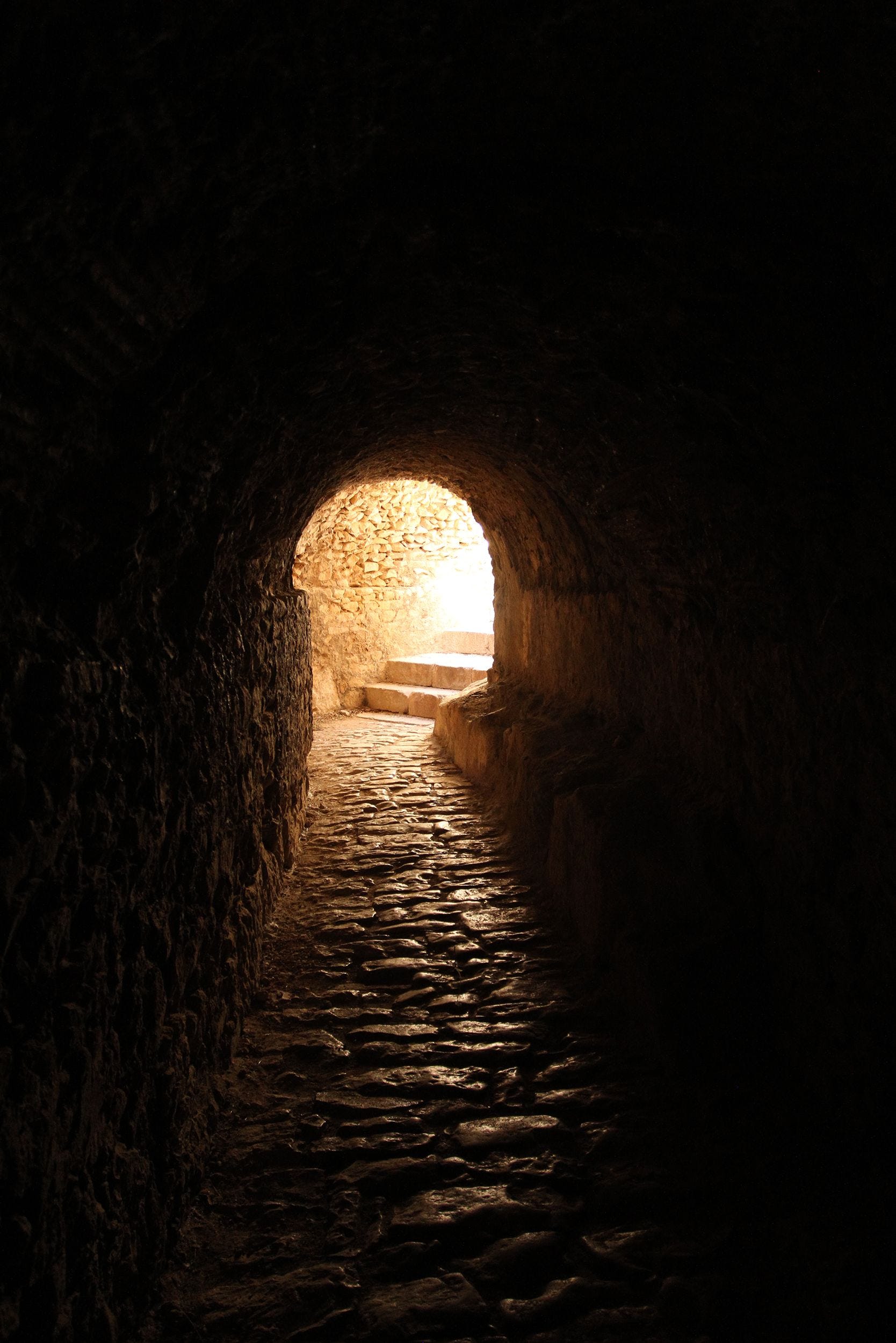
I reach the bottom of the stairs and step onto the great stones of this cool, quiet place. To my left are two archways. The first has an owl engraved above it. I walk past this one, a visit for another time. The second archway has a baobab tree engraved above its entrance. I turn, breathe, and enter. A candle burns, holding my eyes as the walls begin to fade. I can hear the sound of distant waves crashing gently to shore. It’s still quite dark outside – of course it is, it’s 05:40 in the morning. The sun is only just beginning to rise in Plettenberg Bay this early in January. January 2022. My laptop screen glares before me; this presentation still needs some work.
It was unlikely that I should be awake at 05:40. My partner and I had a surfing lesson at 08:00, and I needed to finish this presentation ahead of a work meeting when we got back. So, for the first time in our whole trip, I woke up before dawn.
It was unlikely that my partner and I should be the last two people in the family flat with my dad. Over December the flat fills up with uncles, aunts and cousins from all over South Africa to celebrate Christmas and New Years. But now it was the 11th of January, and everyone had trickled home to return to work. I’d tested positive for COVID on the 30th of December, and had just completed 10 days of isolation, so our plans for travelling back to the UK had been pushed out again. And so we were the final guests in the flat with my dad.
It was unlikely that I should be in South Africa at all in January 2022. I’d arrived for my visit two months before. It was the first time I’d travelled back since the pandemic broke out, and I only planned to stay for three weeks. But then in late November the Omicron variant was reported and South Africa was placed on the naughty list. The UK quarantines were long and horrendously expensive, so I decided to stay a while longer. Then in early December, with plans to leave South Africa just after Christmas and go with my partner to her family for New Years, I was exposed to a friend who had the virus and we decided not to risk infecting my partner’s family. I decided to stay in South Africa until after New Years. I didn’t fall ill. And then, with New Years fast approaching, I finally did catch the virus and had to isolate in a room to prevent making the rest of my family sick – especially more at-risk members like my dad. So I pushed my flight out again. Three times the pandemic trod on my plans and kept me in South Africa.
It was unlikely that my dad would have wished for me to be there as the colour drained from his face. I ran into his room when I heard heaving, fearing that he was struggling to get air in. But this wasn’t COVID: something violent was happening in the centre of his body and his eyes were open but not focussed on the room. “No no no no no no,” the words spilled from my mouth as my whole world was uprooted… Years before, he and I went to the vet with Porshie, our beautiful brown Burmese cat who was ailing with her age. It was time to put her down and our hearts hurt. My dad and I stood in the clinical white room around the metal counter where her fragile form sat calmly, her trust in us keeping her there. The vet had given us a moment and now he was reaching for a needle. My dad signalled for us to go. “No,” I told him tenderly, “I want to be here with her.” We stayed. The needle pierced her flesh. Her life left her body so quickly, urine seeping across the table as the living tension of her muscles melted away. I wondered whether my dad knew, from that day with Porshie, that I would be able to be there with him even if he didn’t want me to go through that hurt. I was there as the baobab tree that held my world in place was ripped from the ground before my heartbroken soul, and it was an honour to be by his side.
It was unlikely that my best friend should be the first medical person on the scene. He had come to visit our small seaside town for the first time in twelve years and was staying nearby with a mutual friend. When the emergency services struggled to find an ambulance, my best friend told me over the phone how to do CPR until he could get there, and once he was there he knew what to try, and when to make the final call.
The 11th of January 2022 was a surreal montage of moments: needing to phone my brother to tell him what had happened; watching them wheel my dad’s body out of the flat; my aunt, uncle and friends arriving grief-stricken to support; visiting the mortuary with my brother after picking him up from the airport to douse the disbelief. While the desolation would colour my experience for months to come, I was also struck by the incredible love that buoyed our spirits as our distributed community huddled to grieve the loss and celebrate the life of a kind, gentle man. With the messages and reflections that flooded in from friends, family and colleagues, I felt like I came to see my dad more fully: all these partial glimpses combining to reveal more of the whole of this person and how he touched our lives.
Suddenly it dawned on me how lucky I was. COVID grounding my plans to leave meant that we could hold a surprise birthday party for my dad, that we got to spend Christmas together and celebrate New Years (from a safe social distance). What would have been just a few days of time together turned into weeks. Because my quarantine ended, we went out together to dinner with his brother the night before he died instead of staying home to work. We sat late into the night recounting stories about family and sharing a whiskey to the sound of the ocean waves. The strange timing of my work presentation and our intended surf lesson meant that I woke up early enough to hear what was happening and could be there with him as he slipped from this world. I am so grateful in retrospect that circumstances conspired, against my will, to bestow me with time and memories that mean everything to me now.
The weeks following his death were the first time in a long time that I felt the patterns of something greater than my rational comprehension at work in our universe. The experience revived a conviction in me that human understanding cannot be the highest organising principle in our world: that there is a nature to this reality that we may come to trust even if its impulses evade our mental apprehension. We might call trusting that which we can’t grasp with our minds “faith”. It gives us room to forgive what happens to us without requiring an impossible explanation. The me who cast his faith aside in the field with the lambs was still in a parent-child relationship with his creator: the agreement, as I saw it then, was that if I was a good boy then nothing bad would happen to me. I wasn’t yet willing to take responsibility for the consequences of my choices in this co-creation. And then, two years later upon losing my dad, the blessings in this tragedy were so obvious. Faith rose up in me to restore itself as a complement to reason, like my left foot complements my right.
I wish I’d given him one last hug before going to bed: I was still so scared of giving him COVID that I didn’t walk down the corridor to hold him as I wished him good night. I would run down that corridor to hug him now. I know he knew I loved him, I just wish I’d given him one more hug.
I breathe out and open my eyes to the unwavering candlelight in the sacred space through the second archway in the crypt of the cathedral without a roof. I raise my hands to my heart and bless the space for what it has gifted me. I turn and step beneath the arch back into the wider underground crypt. I look up and notice the glimmer of stars: glowing jewels set in the crypt ceiling. I can make out some of the constellations, I always feel like I should learn more of them. There’s the Southern Cross: these four stars in our night sky, together with the two pointers, guide a seeker to true south. It’s quite something that these burning balls of gas are so far away from Earth that from anywhere in the southern hemisphere you can rely on them for the cardinal directions. Within the crypt they also helpfully point in the direction of the stairs that take you back up into the cathedral. I follow, ready for the warm sunlight and animated air above.
The sound of seagulls arises as I climb the stairs and a gentle breeze greets my skin back up in the cathedral without a roof. The sun has moved across the sky above, casting rich colours through the stain glass windows of the western entrance to my right. I look left to the apse and can see a familiar wild coastline in the impressive mural spanning the curved walls that mark east. I have a loop to complete, and so I turn away from the apse to walk along the southern wall, the altar once again on my right. The first niche I reach holds a portrait: it’s me in the Sheldonian Theatre in Oxford delivering a speech at the end of my MBA degree. A speech that my dad was there to see in person. The next niche holds a tapestry of the night I had that strange feeling of recognition on an early date with the woman I would one day marry. Her strawberry blond hair framed her face against the backdrop of fairy lights and light wintry rain. My dad got to meet her in person and bless our partnership.
As I see the connections between these moments and my father, the desolating loss of his absence is matched by an appreciation for the moments we were able to share.
I walk a way further and stop before an incredible mosaic. A warm orange shell is held gently in an outstretched hand. Behind it, the sun sets over the Atlantic Ocean. “Wow”, I think to myself, “I am so glad I chose to go to that beach.”
The shell and the sunset
My dad asked for his cremated ashes to be let out to sea in Plettenberg Bay, his spiritual home. Almost a year passed before my brother and I were able to return and fulfil his wishes. That afternoon, after releasing what remained of our father’s physical body to the strong outward flow of the receding tide, we walked back from the lagoon mouth along the beach. We each walked holding our partners’ hands as they held our open hearts. We were not far from the mouth when a warm orange shell caught my eye. I backtracked in the sand to pick it up. I generally advocate that you seek permission from the land before removing objects from it – this shell was loud and clear, and I picked it up from its place at the sea. I had already decided that I would walk the Camino de Santiago in 2023 to, among other intentions, be with the loss of my dad. I had read about Finisterre, literally meaning “the end of the earth”, where the path that leads to Santiago de Compostela continues another 90km to meet the Atlantic Ocean. I would walk the Camino and return this shell to the sea at the end of my pilgrimage.
I needed the shell most on day two of the Camino. After just 27 kilometres of the 1000-kilometre journey, I stumbled into the beachside town of San Sebastian in the midst of an enormous lightning storm. I was soaked and my motivation extinguished. I had so much doubt… about whether I would physically be able to complete the walk, about why I was doing it, about what I was hoping for. In the absence of any logical reason for continuing, I knew that the only way I would be able to uphold my promise to return the shell to the sea was to keep going, to find a way to keep going. And so, I set out on day three.
On day forty I was walking through a tunnel of dense forest when a circular patch of blue sky opened above the path ahead. I kept walking and the blue patch expanded until I broke through into the early October sunlight and an incredible view. The peninsula curved round to my right, culminating in an outcrop of land holding both the town and lighthouse of Finisterre. The end of my journey was in sight. I continued along the sidewalk of a winding road. As I rounded a corner in the relief of some shade, some deep emotions began to rise to the surface of my being. My whole body trembled as I was overcome with the memory of that morning: 5:40 on 11 January 2022. My body shook as the sound of my own voice echoed “no no no no no no,”, tears streaming down my face. I missed him so much. I loved him so much. We’d walked so far together.
I was in the town of Finisterre by late afternoon. It was just another 3km to the lighthouse and the official end of the Camino de Finisterre. But the lighthouse was high above the water level, and I wouldn’t be able to return the shell from there. I’d been told about Mar de Fóra, a beach facing west onto the open Atlantic – I knew that was the place. If I went through to the lighthouse now, I could make it to the beach before sunset and return the shell to the sea. I began to walk.
Just before leaving the town there was a catholic church, Igrexa de Santa María das Areas (or the Church of Saint Mary of the Sands). As was customary by this point, I approached the doors to give thanks for the safe passage that had allowed me this far. The bells rang ahead of a 6pm service and, as I entered the church, a friend and fellow pilgrim approached me. We’d met earlier that day at a simple chapel in what felt like another land. He’d travelled from India, defying the faith of his upbringing to be in his truth with Catholicism. Now at the church he welcomed me with open arms and open spirit, “You’re just in time for the service,” he delighted. I was back in that uncomfortable space between someone else’s expectations and my own path. I paused for a moment, drawing on all that had come to be true over the last 40 days of forging my way one step at a time. “My friend, I have somewhere that I need to be” I told him kindly. “Am I turning my back on the faith that carried me here?” I thought to myself. I put down my bag and walked down the nave of the church. I put my hands together before my heart, closing my eyes to listen. “Do I have permission to go?” I wondered. An exhilarating “yes!” filled my body. I smiled, greeted my friend, picked up my bag and continued my journey to the end of the earth.
I was filled with joy, gratitude and a strange grief when I reached the lighthouse at the end of the road, surrounded by the tears and cheers of others who, too, had completed their journeys. The hues were deepening as the afternoon turned to evening and at 18:55, ready to part from this place, I turned to make my way back to the sands of Mar de Fóra. On the road I met so many of the pilgrims I’d come to know, all of whom were heading to the lighthouse for sunset. We hugged, exchanged well-wishes and said our goodbyes. I knew with all my being that the beach was calling. I checked the time. “Running again at the last minute,” I laughed, shaking my head as I picked up the pace.
My feet met the sand as I took off my socks and shoved them unceremoniously into the backpack that I’d carried over 1000km. The beach stretched away to my left and right to meet mountains dressed in green vegetation, and the bright yellow sun hovered inches above the gentle waves of the welcoming Atlantic Ocean. I took the shell out of the round wooden case and walked in my underwear towards the waters. “I love you so much Daddy.” I waded out into the sea – this curious, orange, ear-shaped shell in my palm. It was once half of the protective housing of a tivela venus clam, which spent its life in the coastal sand filtering microscopic food from the waters above. Over the seasons it had added concentric layers to its encasing until one day the organism passed and only the shell remained, washed up on the shore to be picked up by a mourning son. I had carried it and it had carried me to journey’s end, and now it was finally time to return it to the waters. I cast the shell into the sea and body-surfed the waves as the sun set.
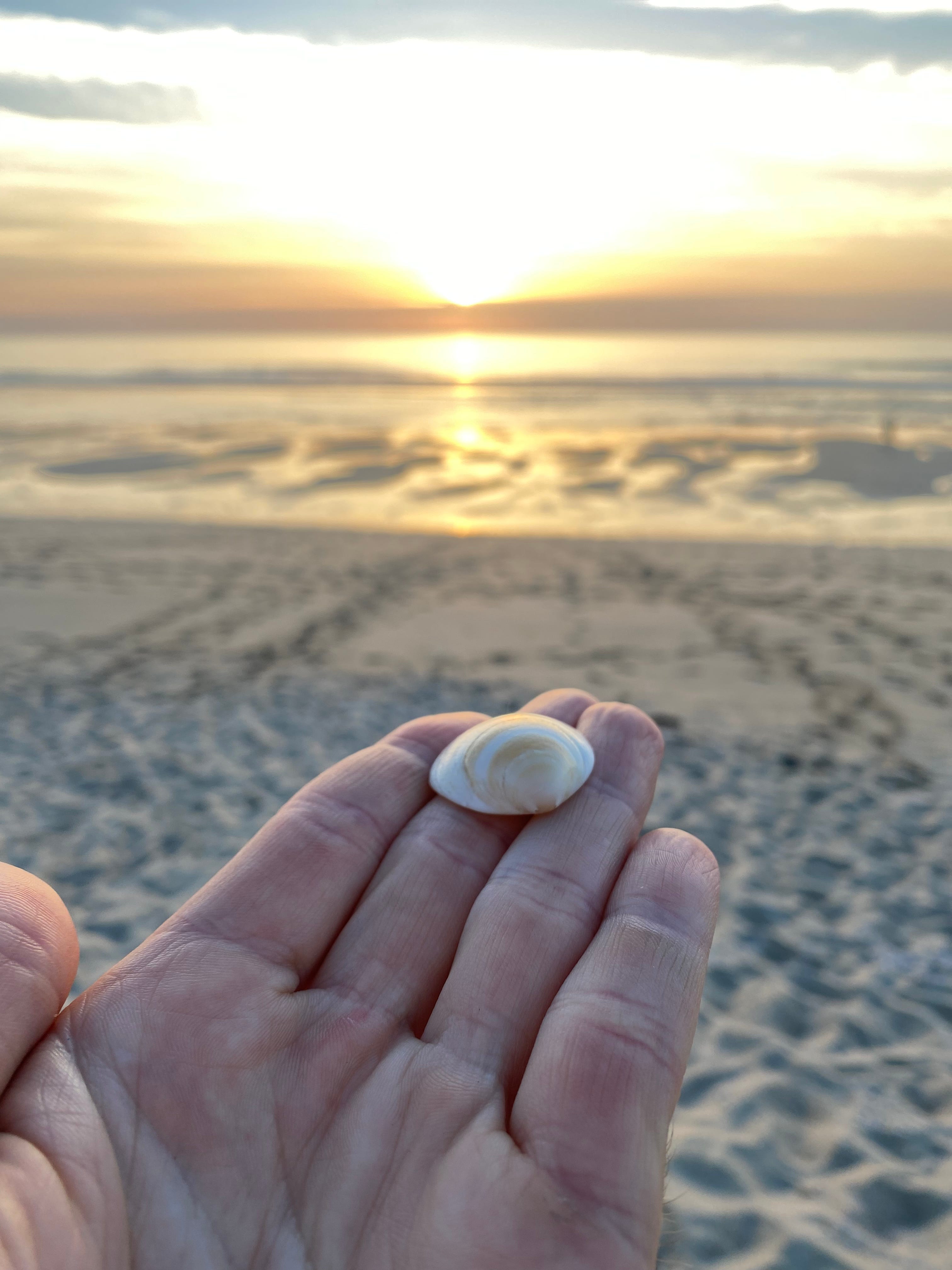
I open my eyes and marvel at the hundreds of tiles composing the mosaic of the shell and the sunset in the cathedral without a roof. All these tiny fragments coming together into something so meaningful. I am so glad I chose to go to that beach.
I continue down the southern wall towards the western entrance and realise there are many niches here not yet adorned with memories – soul imprints in the making. There are journeys yet to come.
A song and a prayer
I arrive back at the great wooden doors of the entrance and turn to look down the nave towards the altar. I have completed my loop around the cathedral without a roof. One last stop before it’s time to return to the world of things.
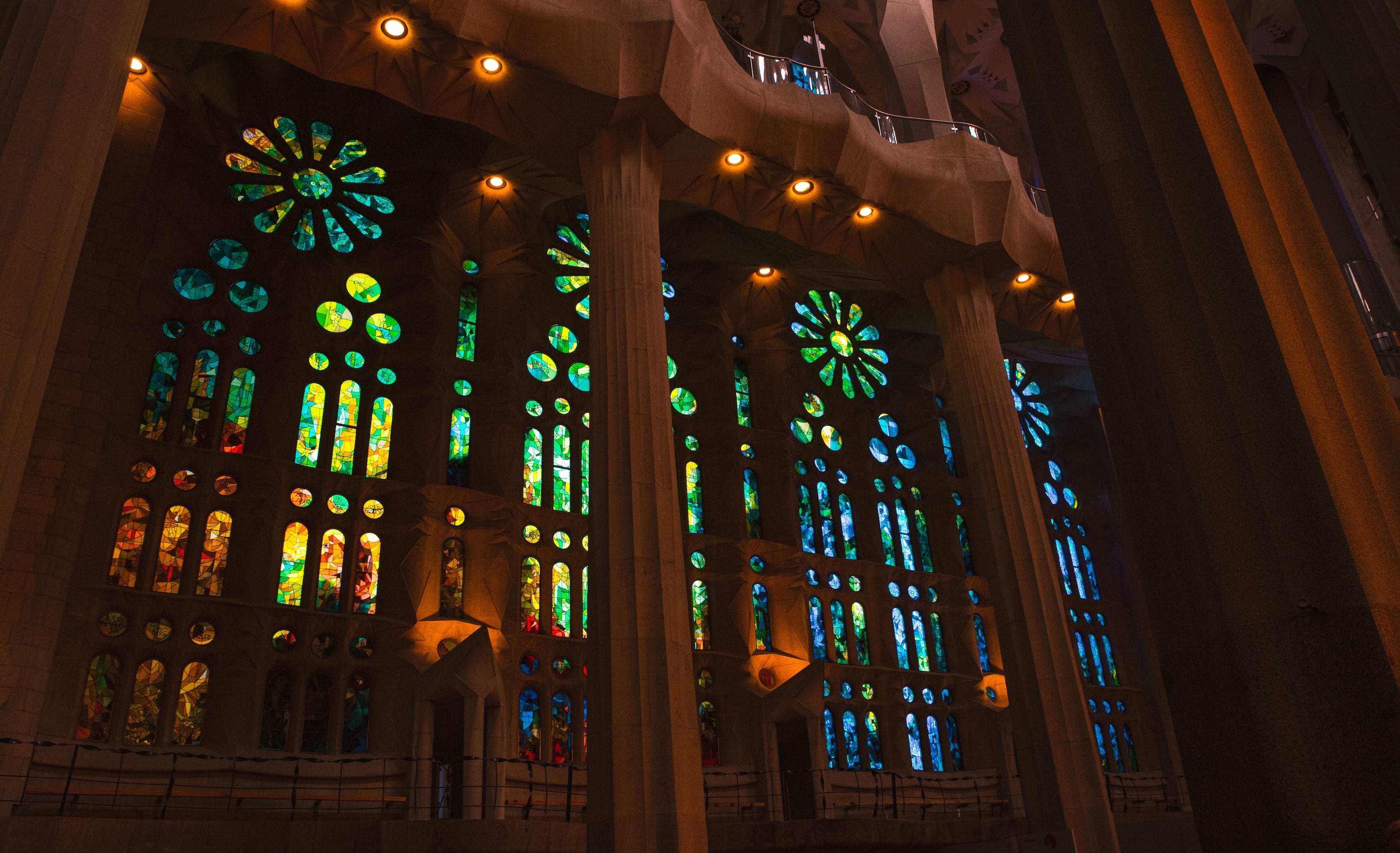
I walk down the nave between the wooden pews, right hand cupped in left hand and thumbs touching together. I love the columns of this cathedral. Each rises up like a great tree towards the sky above, branches radiating from the trunk in a geometric spiral matching the living design of the trees outside. So much of the architecture here is inspired by Gaudí’s work on Sagrada Familia in Barcelona, Spain. The place of worship he envisioned celebrates the divine within the context of nature; he didn’t pave over our natural world using straight lines and hard corners. You fall in love the moment you enter it from the bustling city streets outside, like stepping into another world: our wild world. Famously, Gaudí designed the highest tower of the basilica to be just lower than the summit of Montjuïc hill, the mountain overlooking the city. He’s quoted as saying “the work of man should never surpass the work of God.” 100 years after his premature death, stonemasons, engineers, sculptors, artists, crane operators and others continue to construct that devotional space. It’s a small miracle to be able to borrow from his vision for this cathedral without a roof.
On the front pew I spot an open white book. I walk over and pick it up, a smile slowly spreading across my face. It’s an old hymnbook from my primary school in Johannesburg, South Africa. I know half of these songs by heart; we would sing them in the mornings of our youth long before we stepped out of our innocence into the world. The hymnbook is open to an old favourite, one that invites you to move: “Dance, then, wherever you may be…” I decide I’ll borrow the book for a while and tuck it under my arm.
I walk up to the simple stone altar adorned with flowers; it’s dappled in green and blue in the late afternoon light and my shadow dances through the colours. I look around the cathedral at the moments that have guided this mortal life, held between these incredible columns rising to meet the purpling sky. Tracing the path that I did today, I wonder – not for the first time – whether I was meant to be there when Daddy died. Here, at the heart of the cathedral without a roof, under the first stars of evening, I whisper a prayer:
Please keep me grounded with my feet on the earth,
connected by the crown of my head to the starry heavens,
with my heart open, unhurt, to all that is.
Please hold me in relationship, together with others,
And allow me to walk the sacred path
beyond the world of opposites.
I almost finish before adding:
Please may all beings find
their own loving way to the divine.
I close the great wooden doors gently behind me in the early twilight, take a life-affirming breath and walk down the steps from the cathedral without a roof.
Afterword
Thank you for walking through the wilderness with me. In the next essay I’ll be exploring the power of stories, how trauma is passed between generations, and what it takes to heal. Next time our wild idea is: what if Mommy healed her past?
If this work resonated with you, subscribe and share it with others. Spread the love.
Acknowledgements
A huge thank you to:
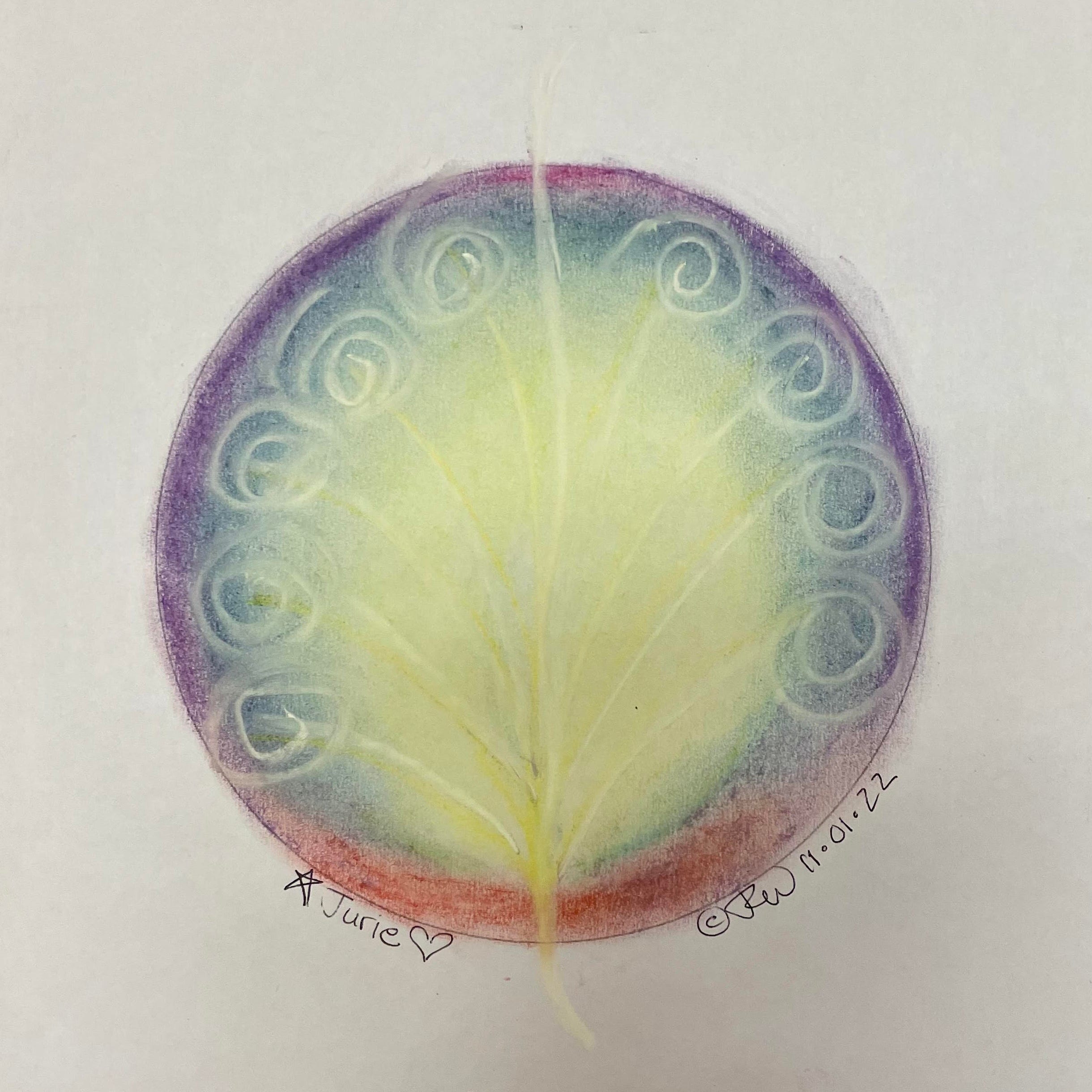
Jayni for the gift of the cathedral without a roof, the generous feedback on early drafts and for your beautiful mandala artwork included in the print version of this piece
Phillip-Jan van Zyl for his beautiful piano collection “Spiral” (in the audio version)
Leigh and Lesanne for encouraging, supporting and shaping this work
Louise for guiding my way to inspired creativity
My partner Ash for your patience and support throughout this project
The many wonderful humans who inspired these words through our conversations.
Further attribution:
Kelly, D. (2026) Gothic ruin window in Irish countryside. [photograph] Pexels. Available at: https://www.pexels.com/photo/gothic-ruin-window-in-irish-countryside-36709077/ (Accessed 30 August 2026).
Leeloo The First (2020) An old door. [photograph] Pexels. Available at: https://www.pexels.com/photo/an-old-door-5038939/ (Accessed 30 August 2026).
Ann H (2026) Abstract stained glass in Prague, Czech Republic. [photograph] Pexels. Available at: https://www.pexels.com/photo/abstract-stained-glass-in-prague-czech-republic-39070092/ (Accessed 30 August 2026).
Sokil (2026) Mysterious ancient stone tunnel in Teboursouk. [photograph] Pexels. Available at: https://www.pexels.com/photo/mysterious-ancient-stone-tunnel-in-teboursouk-38734169/ (Accessed 30 August 2026).
Pugliese, G. (2023) Stained glass windows in Sagrada Familia, Barcelona, Spain. [photograph] Pexels. Available at: https://www.pexels.com/photo/stained-glass-windows-in-sagrada-familia-barcelona-spain-16841074/ (Accessed 30 August 2026).
Music by Kyle Preston, Max H and Kevin Graham as well as sound effects under licence from Artlist (in the audio version)
Wild Ideas is produced by JJ van de Vyver. Views expressed are mine alone and don’t represent my clients or any organisations I’m affiliated with. Nothing here is professional advice of any kind.

Very moving, thanks for sharing this with us.